
Detect and Suppress: A Mechanistic Defense against Adversarial Patches in VLA Models
AI & Autonomy

Detect and Suppress: A Mechanistic Defense against Adversarial Patches in VLA Models

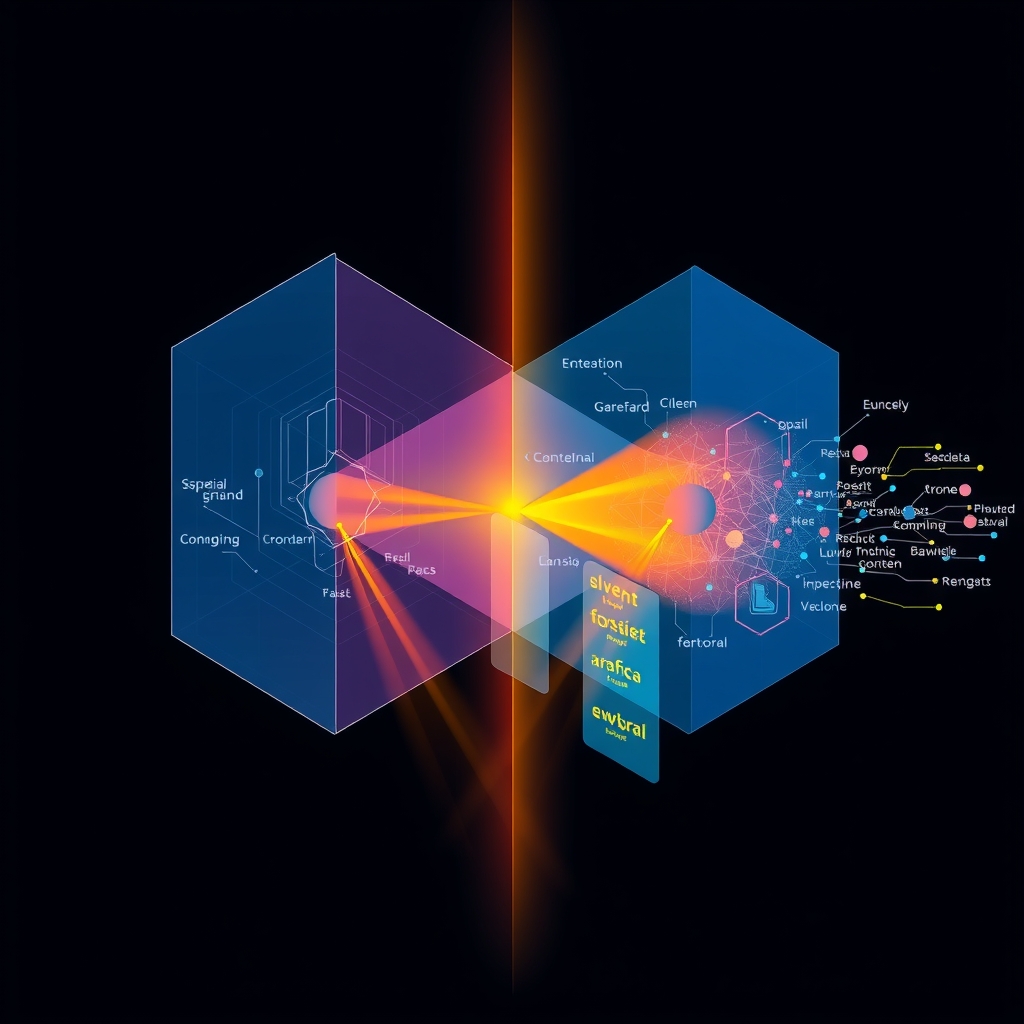
Researchers have identified a specific internal SAE feature in VLA models that activates in the presence of adversarial patches, enabling a targeted, inference-time suppression defense that requires no model retraining. Critically, the defense must be applied conditionally—only when an attack is detected—as continuous suppression measurably degrades normal policy performance.

By UAVHelpline Editorial · 6 min read
AGT-CV: Drexel's Air-Ground Perception Dataset Targets the Off-Road Blind Spot in Multi-Robot AI
2026-10-05

AGT-CV: Drexel's Air-Ground Perception Dataset Targets the Off-Road Blind Spot in Multi-Robot AI

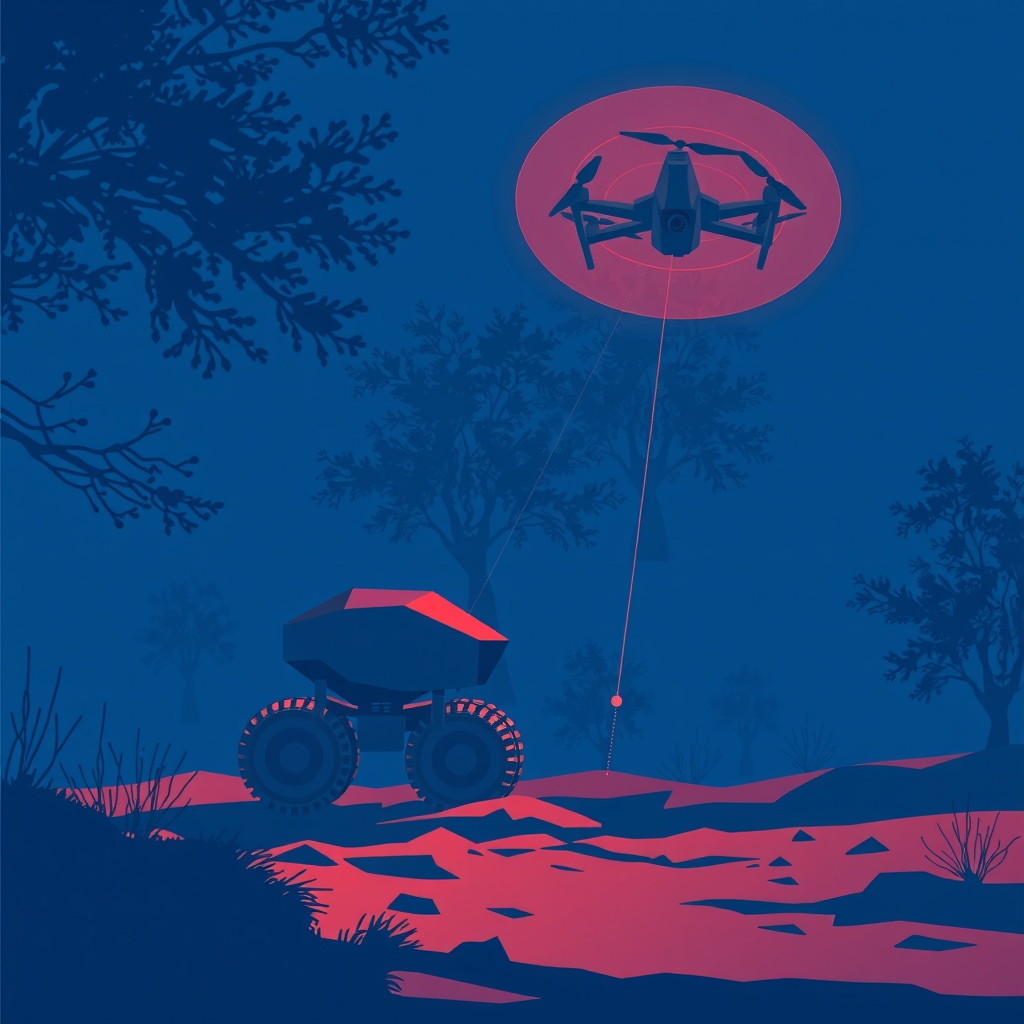
Researchers at Drexel University have released AGT-CV, a real-world multi-modal dataset pairing a Clearpath Husky UGV with an Autel EVO II UAV across five unstructured terrain types, yielding over 13,000 synchronized frames. The dataset is the first of its kind built specifically for cross-view collaborative perception in off-road environments, integrating LiDAR, stereo vision, thermal imaging, and Meta's SAM 3 zero-shot segmentation.

By UAVHelpline Editorial

FARE: The Forensic Watchdog That Catches AI Providers Swapping Certified Image Generators
2026-09-29

FARE: The Forensic Watchdog That Catches AI Providers Swapping Certified Image Generators

Researchers at the University of Edinburgh have developed FARE, a deployment-time auditing system that detects when an AI image generator API has been silently swapped for a different model after certification. Accepted at NeurIPS 2026, FARE operates from output images alone — requiring no access to model weights or architecture — and achieves over 92% true positive detection rates at a strict 1% false positive threshold.

By UAVHelpline Editorial
RHINO-AR: How Augmented Reality Is Making a 1997 Robot's Invisible Intelligence Visible Again
2026-09-25

RHINO-AR: How Augmented Reality Is Making a 1997 Robot's Invisible Intelligence Visible Again

Researchers at the University of Bonn have built RHINO-AR, a Magic Leap 2–based AR exhibit that overlays interactive visualizations of LiDAR sensing, traversability, and path planning onto the physical, museum-displayed body of RHINO, a landmark autonomous mobile robot first deployed in 1997. A two-day, 22-participant museum study found the system successfully conveyed core autonomous-navigation concepts to non-expert visitors and was broadly preferred over its VR predecessor.

By UAVHelpline Editorial
GeoBridge++: The Framework That Teaches Drones to Find Themselves Without Satellite Maps
2026-09-24

GeoBridge++: The Framework That Teaches Drones to Find Themselves Without Satellite Maps

Researchers from Wuhan University's MiliLab have published GeoBridge++, a fact-guided geo-semantic bridging framework that enables robust UAV geo-localization by fusing drone, satellite, street-view, and static-map imagery with real-world geographic knowledge. The work, an extension of CVPR 2026-accepted GeoBridge, is accompanied by GeoLoc-MM, a million-scale multi-view dataset spanning six spatial extents per location.

By UAVHelpline Editorial

High-Frequency Edge Sharpening Is All You Need: FPR Beats Transferable Adversarial Attacks With a Single Convolution
2026-09-18

High-Frequency Edge Sharpening Is All You Need: FPR Beats Transferable Adversarial Attacks With a Single Convolution

Researchers Jiaming Liang and Chi-Man Pun have shown that a single channel-wise Laplacian sharpening convolution — requiring no surrogate model, no iterative optimisation, and no dedicated training — can measurably harden deep neural network inputs against transferable adversarial attacks. The technique, called Fast Preemptive Robustification (FPR), cuts untargeted attack success rates by 12.7 percentage points and slashes targeted attack success rates from 10.7% to 4.1%.

By UAVHelpline Editorial

Auto-HSI: How LLMs Are Rewriting the Rules of Human-Swarm Control — On Demand
2026-09-16

Auto-HSI: How LLMs Are Rewriting the Rules of Human-Swarm Control — On Demand

Researchers have introduced Auto-HSI, a system that uses large language models to automatically generate personalised gesture-driven control interfaces for robot swarms in real time. Tested on 50 simulated robots across maze-traversal, goal-scoring, and swarm-splitting scenarios, it removes the need for operator programming expertise.

By UAVHelpline Editorial

BSC-Net: How a ResNet-U-Net Hybrid Is Solving the Small-Branch Problem in Coronary Artery Imaging
2026-09-15

BSC-Net: How a ResNet-U-Net Hybrid Is Solving the Small-Branch Problem in Coronary Artery Imaging

Researchers have introduced BSC-Net, a deep learning framework that combines targeted sampling, long-range contextual modelling, and a novel Edge-Informed Loss to preserve vascular continuity and recover missed small branches in X-ray coronary angiography. Validated on two public datasets, BSC-Net achieves state-of-the-art segmentation scores and extends its pipeline to produce clinically actionable haemodynamic metrics.

By UAVHelpline Editorial

MARE: How RLHF and Vision-Language Models Are Rewriting the Rules of Deepfake Detection
2026-09-14

MARE: How RLHF and Vision-Language Models Are Rewriting the Rules of Deepfake Detection

Researchers from Sun Yat-sen University and the University of Macau have proposed MARE, a framework that applies reinforcement learning from human feedback (RLHF) to large vision-language models (VLMs) for explainable, spatially grounded deepfake detection. By combining multi-dimensional reward functions with a dedicated forgery disentanglement module, MARE claims state-of-the-art accuracy and reasoning reliability—a result with direct implications for AI-integrity systems aboard autonomous UAV platforms.

By UAVHelpline Editorial

TileNet: How a Lean CNN-SVM Hybrid Is Bringing Real-Time Defect Detection to Flat-Roof Drone Inspections
2026-09-14

TileNet: How a Lean CNN-SVM Hybrid Is Bringing Real-Time Defect Detection to Flat-Roof Drone Inspections

Researchers at Carleton University have published TileNet, a tile-based CNN-SVM architecture that runs onboard a DJI Matrice 350 RTK and achieves 94.4% flat-roof defect classification accuracy — outperforming both GoogLeNet and AlexNet. The system uses a dual-altitude flight strategy to capture fine-scale and structural defects simultaneously, targeting the strict power and compute constraints of embedded UAS hardware.

By UAVHelpline Editorial

ReactHuman: Why Today's AI Brains Still Fumble One-in-Three Physical Emergencies
2026-09-12

ReactHuman: Why Today's AI Brains Still Fumble One-in-Three Physical Emergencies

Researchers have introduced ReactHuman, the first physics-grounded benchmark that forces multimodal LLMs to react in real-time to sudden household hazards inside a rigid-body simulator rather than merely answering questions about them. Evaluations across seven leading models reveal that reactive physical safety remains unsolved, with models mishandling roughly one hazard in three — and the failures do not diminish as model scale grows.

By UAVHelpline Editorial

AngelFingerprint: The First Weight-Integrated Watermark That Explains Its Own AI Edits
2026-09-07

AngelFingerprint: The First Weight-Integrated Watermark That Explains Its Own AI Edits

Researchers have proposed AngelFingerprint, a diffusion model watermarking framework that embeds the editing prompt's semantic meaning directly into model weights via LoRA — making the watermark structurally invisible and nearly impossible to strip under full white-box access. Benchmarked on MagicBrush, the system achieves 86% top-1 accuracy in 200-way prompt retrieval, against 20% for conventional prompt-inversion baselines.

By UAVHelpline Editorial

Game-Theoretic Drone Swarm Defense: A Case Study in Applied Differential Game Theory
2026-09-07

Game-Theoretic Drone Swarm Defense: A Case Study in Applied Differential Game Theory

A technical report from MIT Lincoln Laboratory demonstrates that differential game theory can outperform conventional optimization tactics for defender swarm interception, raising successful defense probability from 94.6% to 96.8% against evasive intruders. A paired-trial Bayesian analysis assigns a 99.9% posterior probability to this result, closing roughly 41% of the remaining gap to perfect defense.

By UAVHelpline Editorial

PIVOT: The Drone-Captured Dataset Exposing Hidden Cracks in 3D Reconstruction Benchmarks
2026-08-31

PIVOT: The Drone-Captured Dataset Exposing Hidden Cracks in 3D Reconstruction Benchmarks

Researchers have released PIVOT, a multi-trajectory dataset captured with a DJI Mini 4 Pro that systematically tests NeRF and 3D Gaussian Splatting methods under realistic drone-operating conditions. Benchmark results reveal consistent quality gaps when models are evaluated on camera paths and pose sources not seen during training—exposing a fundamental evaluation blind spot in the field.

By UAVHelpline Editorial

Turning the Tables: How 'Adversarial Attacks for Good' Are Rewriting Visual-Content Protection Across the AI Lifecycle
2026-08-07

Turning the Tables: How 'Adversarial Attacks for Good' Are Rewriting Visual-Content Protection Across the AI Lifecycle

A new arXiv survey unifies five previously isolated research communities—privacy filters, unlearnable examples, generative safeguards, adversarial CAPTCHAs, and provenance mechanisms—under a single 'adversarial attacks for good' paradigm. The authors find that most protections remain validated only against static or weakly adaptive adversaries, leaving a critical deployment gap as visual AI pipelines evolve toward multimodal agents.

By UAVHelpline Editorial
Counting the Cost Without Seeing the Strike: Zero-Shot AI Models Bypass Satellite Imagery Blackouts to Map Impacted Infrastructure
2026-08-05

Counting the Cost Without Seeing the Strike: Zero-Shot AI Models Bypass Satellite Imagery Blackouts to Map Impacted Infrastructure

A new arXiv preprint introduces a zero-shot framework that estimates conflict-zone building impacts using only archival maps and LLM-extracted weapon data — no post-strike satellite imagery required. The system pairs Hopkinson-Cranz blast-radius physics with adaptive 2D segmentation and depth-augmented Large Vision-Language Models to count exposed structures in both sparse and dense urban environments.

By UAVHelpline Editorial
DiffAttack: How Latent Diffusion Models Are Rewriting the Rules of Facial Biometric Security
2026-08-05

DiffAttack: How Latent Diffusion Models Are Rewriting the Rules of Facial Biometric Security

A new arXiv paper, DiffAttack, uses latent diffusion model optimization to generate adversarial faces that fool deep face recognition systems at an 84.86% average success rate across multiple models. The framework significantly outperforms both noise-based and semantic adversarial methods, raising urgent questions for operators deploying UAV-mounted biometric identification systems.

By UAVHelpline Editorial
LabEvolver: Peking University's Dual-Loop Framework Teaches Robotic Lab Agents to Learn by Doing — Without Any Retraining
2026-08-05

LabEvolver: Peking University's Dual-Loop Framework Teaches Robotic Lab Agents to Learn by Doing — Without Any Retraining

Researchers at Peking University have published LabEvolver, a training-free framework that gives robotic wet-lab agents persistent episodic memory by distilling execution trajectories into reusable skill and safety experience. In real-world solution-preparation trials, it cut pH-regulation task time by 48.2% and reduced safety-gate intercepts by 60.0%, while on the ALFWorld benchmark it lifted cumulative success from 76.2% to 91.4% across 500 continual tasks.

By UAVHelpline Editorial
GPAC: How Implicit Coordination Could Unlock Truly Scalable Multi-Drone Cargo Lifts
2026-07-03

GPAC: How Implicit Coordination Could Unlock Truly Scalable Multi-Drone Cargo Lifts

Researchers have published GPAC, a four-layer hierarchical control architecture that allows an arbitrary number of quadrotors to cooperatively transport a cable-suspended payload without any central coordinator, shared payload mass data, or inter-agent cable-state exchange. High-fidelity simulation across 13 randomised trials yielded a mean payload-tracking error of just 33.8 cm, with all control and estimation loops closed through onboard sensors alone.

By UAVHelpline Editorial
FLYNN: When a Fruit Fly's Brain Teaches Robots to Navigate Blind
2026-07-03

FLYNN: When a Fruit Fly's Brain Teaches Robots to Navigate Blind

Researchers have trained a recurrent neural network whose architecture is directly wired from the synaptic-resolution connectome of the fruit fly Drosophila melanogaster to perform vision-based robot navigation. FLYNN outperforms conventional hand-crafted networks on out-of-distribution scenarios and keeps functioning even under total camera blackout — without any retraining.

By UAVHelpline Editorial
Learning to Throw: How a Hybrid RL Framework Teaches Quadrotors to Fling Cable-Suspended Payloads with Precision
2026-07-01

Learning to Throw: How a Hybrid RL Framework Teaches Quadrotors to Fling Cable-Suspended Payloads with Precision

Researchers have trained a deep reinforcement learning policy that enables a quadrotor to accurately throw a cable-suspended payload to a designated target, cutting landing error by up to 50% and throw duration by up to 30% versus model-based baselines. The policy transfers zero-shot from simulation to real hardware, and a companion vision-driven variant matches the accuracy of the state-based version.

By UAVHelpline Editorial